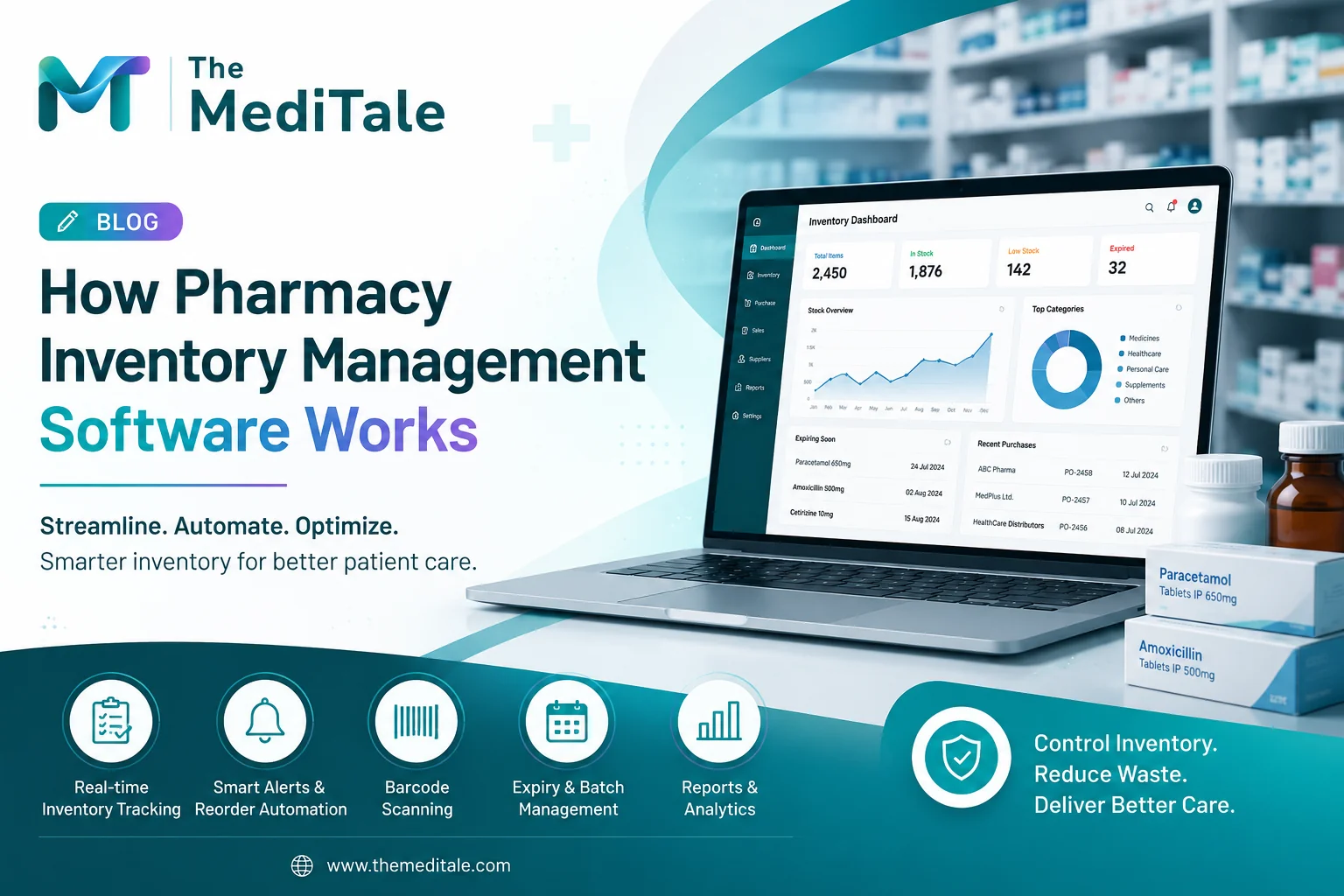
How Pharmacy Inventory Management Software Works
Managing pharmacy inventory has become increasingly challenging as healthcare providers handle thousands of medicines, medical supplies, controlled substances, and over-the-counter products every day. Maintaining the right stock levels while avoiding expired medicines, stock shortages, and excess inventory requires far more than manual spreadsheets or paper records.
This is where pharmacy inventory management software transforms daily operations.
Understanding how pharmacy inventory management software works helps pharmacy owners, hospitals, retail pharmacies, wholesalers, and healthcare organizations make informed decisions about improving inventory accuracy, reducing waste, and delivering better patient care.
This guide explains every aspect of pharmacy inventory management software—from its working process and core modules to advanced automation features, business benefits, implementation, and future trends.
What Is Pharmacy Inventory Management Software?
Pharmacy inventory management software is a digital system designed to monitor, organize, track, and optimize medication inventory throughout the entire pharmacy supply chain.
Instead of relying on manual counting or handwritten stock registers, the software continuously updates inventory whenever medicines are:
- Purchased
- Received
- Sold
- Dispensed
- Returned
- Transferred
- Expired
- Damaged
The software provides real-time inventory visibility while automating purchasing, expiry tracking, stock alerts, supplier management, and reporting.
Whether used in an independent pharmacy, hospital pharmacy, chain pharmacy, or pharmaceutical distribution center, the software ensures accurate inventory control with minimal manual effort.
Why Inventory Management Matters in Pharmacies
Unlike other retail businesses, pharmacies deal with products that directly affect patient health.
Poor inventory management can lead to:
- Medicine shortages
- Overstocking
- Expired medications
- Financial losses
- Prescription delays
- Regulatory compliance issues
- Patient dissatisfaction
- Increased operational costs
A reliable pharmacy inventory management solution minimizes these risks while maintaining uninterrupted medicine availability.
How Pharmacy Inventory Management Software Works
The software follows a complete inventory lifecycle from procurement to dispensing.
Below is the step-by-step workflow.
Step 1: Product Database Creation
Everything begins with building a centralized medicine database.
Each medicine includes information such as:
- Medicine name
- Generic name
- Brand
- Manufacturer
- Batch number
- Barcode
- SKU
- Category
- Dosage
- Packaging
- Purchase price
- Selling price
- GST/VAT
- Expiry date
- Manufacturing date
- Storage requirements
- Supplier details
This centralized database eliminates duplicate entries and improves inventory accuracy.
Step 2: Medicine Procurement
When inventory reaches predefined minimum stock levels, the software automatically identifies replenishment requirements.
Purchase orders can be generated automatically based on:
- Minimum stock levels
- Sales history
- Seasonal demand
- Fast-moving medicines
- Supplier lead times
- Pending customer orders
Pharmacists no longer need to manually calculate purchase quantities.
Step 3: Goods Receipt and Verification
After medicines arrive from suppliers, inventory staff verify:
- Quantity received
- Batch numbers
- Expiry dates
- Invoice details
- Purchase prices
- Manufacturer information
Barcode scanning significantly speeds up this process.
Once verified, inventory updates instantly.
Step 4: Real-Time Inventory Updates
One of the biggest strengths of pharmacy inventory software is real-time inventory synchronization.
Whenever a medicine is:
- Sold
- Dispensed
- Returned
- Damaged
- Transferred
The available stock updates automatically.
Every authorized user sees the same inventory levels instantly.
This prevents duplicate orders and inaccurate stock information.
Step 5: Prescription Dispensing
When pharmacists process prescriptions, the software:
- Verifies medicine availability
- Checks batch numbers
- Suggests available alternatives if needed
- Reduces stock automatically
- Records dispensing history
- Updates patient medication records (when integrated)
This reduces dispensing errors while improving workflow efficiency.
Step 6: Expiry Date Monitoring
Medicine expiry management is one of the most valuable features.
The software continuously monitors expiry dates and generates alerts before medicines expire.
Typical notifications include:
- 180-day expiry warning
- 90-day warning
- 60-day warning
- 30-day warning
- Immediate expiry alerts
This enables pharmacies to:
- Prioritize near-expiry medicines
- Return eligible stock to suppliers
- Offer promotional discounts where appropriate
- Reduce financial losses
Step 7: Stock Level Monitoring
Every medicine has configurable inventory thresholds.
These include:
- Minimum stock
- Maximum stock
- Reorder level
- Safety stock
- Economic order quantity
Whenever stock falls below the reorder point, alerts appear instantly.
This prevents stockouts without overstocking.
Step 8: Barcode and QR Code Scanning
Modern pharmacy software supports barcode or QR code technology.
Barcode scanning simplifies:
- Receiving inventory
- Sales
- Prescription dispensing
- Internal transfers
- Physical stock audits
- Product verification
This minimizes manual entry and significantly improves inventory accuracy.
Step 9: Batch Tracking
Many medicines require batch-level traceability.
The software records:
- Batch number
- Manufacturing date
- Expiry date
- Supplier
- Quantity received
- Quantity sold
Batch tracking becomes especially important during:
- Product recalls
- Regulatory inspections
- Quality investigations
Step 10: Reporting and Analytics
The software generates detailed inventory reports automatically.
Examples include:
- Current inventory valuation
- Fast-moving medicines
- Slow-moving inventory
- Dead stock
- Near-expiry products
- Purchase reports
- Sales reports
- Supplier performance
- Profit margins
- Stock adjustment history
These reports help pharmacy managers make data-driven purchasing decisions.
Core Components of Pharmacy Inventory Management Software
Inventory Dashboard
A centralized dashboard provides complete visibility into inventory performance.
Users can quickly monitor:
- Available stock
- Pending purchase orders
- Expiring medicines
- Stock shortages
- Sales performance
- Purchase trends
Purchase Management
The purchase management module automates supplier interactions.
Features include:
- Purchase requests
- Purchase orders
- Goods receipt
- Vendor comparison
- Invoice management
- Payment tracking
Supplier Management
Maintaining supplier information improves procurement efficiency.
The software stores:
- Supplier contact information
- Delivery history
- Pricing agreements
- Payment terms
- Product catalogues
- Performance ratings
Stock Adjustment
Inventory discrepancies occasionally occur because of:
- Damaged medicines
- Theft
- Counting mistakes
- Returns
- Expired stock
The software records every adjustment with complete audit history.
Return Management
Pharmacy inventory software simplifies:
- Customer returns
- Supplier returns
- Expired medicine returns
- Damaged inventory returns
Every return automatically updates stock records.
Advanced Features of Modern Pharmacy Inventory Management Software
Today's pharmacy management systems include advanced automation beyond basic inventory tracking.
Artificial Intelligence Forecasting
AI predicts future inventory requirements using:
- Historical sales
- Seasonal demand
- Disease outbreaks
- Prescription trends
- Local healthcare patterns
This improves purchasing accuracy.
Automated Reordering
Instead of manually placing orders, the software automatically creates purchase orders when stock reaches predefined thresholds.
Managers simply approve the recommendations.
Multi-Location Inventory Management
Large pharmacy chains can manage inventory across multiple branches.
Features include:
- Branch inventory visibility
- Internal stock transfers
- Central warehouse management
- Branch-specific reports
Cloud-Based Access
Cloud deployment allows authorized users to access inventory securely from anywhere.
Benefits include:
- Automatic backups
- Remote monitoring
- Multi-device access
- Real-time synchronization
- Lower IT maintenance
Mobile Inventory Management
Mobile apps allow staff to:
- Scan medicines
- Check stock
- Approve purchases
- Review reports
- Perform stock audits
without returning to desktop computers.
Benefits of Pharmacy Inventory Management Software
Reduced Stockouts
Automatic inventory monitoring ensures medicines remain available when patients need them.
Lower Expiry Losses
Expiry tracking minimizes wasted inventory.
Better Cash Flow
Optimized purchasing prevents excessive inventory investment.
Improved Accuracy
Barcode scanning reduces human error.
Faster Prescription Processing
Real-time inventory visibility speeds prescription fulfillment.
Regulatory Compliance
Complete inventory history supports inspections and controlled substance regulations.
Higher Productivity
Automation reduces repetitive administrative work.
Better Customer Satisfaction
Patients receive medicines without unnecessary delays.
Industries That Benefit from Pharmacy Inventory Software
The solution serves many healthcare organizations, including:
- Retail pharmacies
- Hospital pharmacies
- Chain pharmacies
- Online pharmacies
- Pharmaceutical wholesalers
- Medical distributors
- Specialty pharmacies
- Long-term care facilities
- Clinics
- Government healthcare organizations
Integration with Other Healthcare Systems
Modern pharmacy inventory software integrates with:
- Hospital Management Systems — Inventory synchronizes with inpatient and outpatient pharmacy departments.
- Electronic Medical Records (EMR) — Medicine dispensing updates patient records automatically.
- Electronic Health Records (EHR) — Prescriptions flow directly into pharmacy workflows.
- Point of Sale Systems — Sales immediately update inventory.
- Accounting Software — Purchase invoices, taxes, and inventory valuation synchronize automatically.
- Supplier Portals — Electronic purchase orders improve procurement efficiency.
Challenges Solved by Pharmacy Inventory Management Software
- Frequent stock shortages — Automated replenishment prevents empty shelves.
- Excess inventory — Demand forecasting minimizes overstocking.
- Expired medicines — Expiry alerts reduce wastage.
- Manual errors — Barcode technology improves accuracy.
- Poor inventory visibility — Real-time dashboards provide complete transparency.
- Slow audits — Digital inventory records simplify physical verification.
Best Practices for Successful Pharmacy Inventory Management
Organizations achieve better results by following these practices:
- Perform regular stock audits.
- Set accurate minimum and maximum stock levels.
- Monitor fast-moving and slow-moving medicines separately.
- Review supplier performance periodically.
- Use barcode scanning wherever possible.
- Train pharmacy staff on inventory workflows.
- Monitor expiry reports daily.
- Analyze purchasing trends monthly.
- Automate reorder processes.
- Maintain secure user access controls.
Emerging Trends in Pharmacy Inventory Management
Technology continues to improve inventory operations.
Future-ready pharmacy software increasingly includes:
- Artificial Intelligence — Smarter demand forecasting and automated decision-making.
- Machine Learning — Continuous improvement in inventory recommendations.
- IoT Integration — Connected storage cabinets monitor inventory automatically.
- RFID Tracking — Faster inventory counting with minimal manual scanning.
- Predictive Analytics — Early identification of inventory risks before shortages occur.
- Cloud-Native Platforms — Greater scalability for growing healthcare organizations.
- Mobile-First Operations — Inventory management from smartphones and tablets.
How to Choose the Right Pharmacy Inventory Management Software
When evaluating solutions, organizations should look for:
- Real-time inventory tracking
- Barcode and QR code support
- Batch and expiry management
- Automated purchase orders
- Supplier management
- Multi-location support
- Cloud deployment
- Mobile accessibility
- Regulatory compliance features
- Integration with pharmacy, POS, EMR, EHR, and accounting systems
- Custom reporting and analytics
- User-friendly interface
- Strong data security
- Reliable customer support
- Scalable architecture for future growth
Choosing software with these capabilities helps ensure long-term operational efficiency and a better return on investment.
Why Modern Pharmacies Are Moving Toward Automation
Healthcare is becoming increasingly data-driven, and manual inventory management can no longer keep pace with growing prescription volumes, stricter regulations, and rising patient expectations. Automation reduces repetitive tasks, improves visibility across the supply chain, and enables pharmacy teams to spend more time on patient care rather than administrative work.
As pharmacies expand into online ordering, home delivery, and multi-location operations, intelligent inventory management becomes a critical part of delivering consistent, reliable service. Organizations that invest in modern pharmacy inventory software are better equipped to control costs, maintain compliance, and adapt to changing healthcare demands.
Conclusion
Understanding how pharmacy inventory management software works reveals why it has become an essential technology for modern pharmacies. By automating procurement, inventory tracking, barcode scanning, batch management, expiry monitoring, reporting, and supplier coordination, the software creates a more accurate, efficient, and compliant inventory process.
Beyond reducing stockouts and minimizing expired medicines, it empowers pharmacy teams with real-time insights, streamlined workflows, and data-driven decision-making. Whether implemented in a retail pharmacy, hospital, or wholesale distribution environment, the right inventory management solution supports sustainable growth while enhancing patient service and operational performance.
As digital healthcare continues to evolve, pharmacy inventory management software will play an even greater role in ensuring medicines are available when needed, inventory costs remain under control, and pharmacies can confidently meet the demands of modern healthcare.