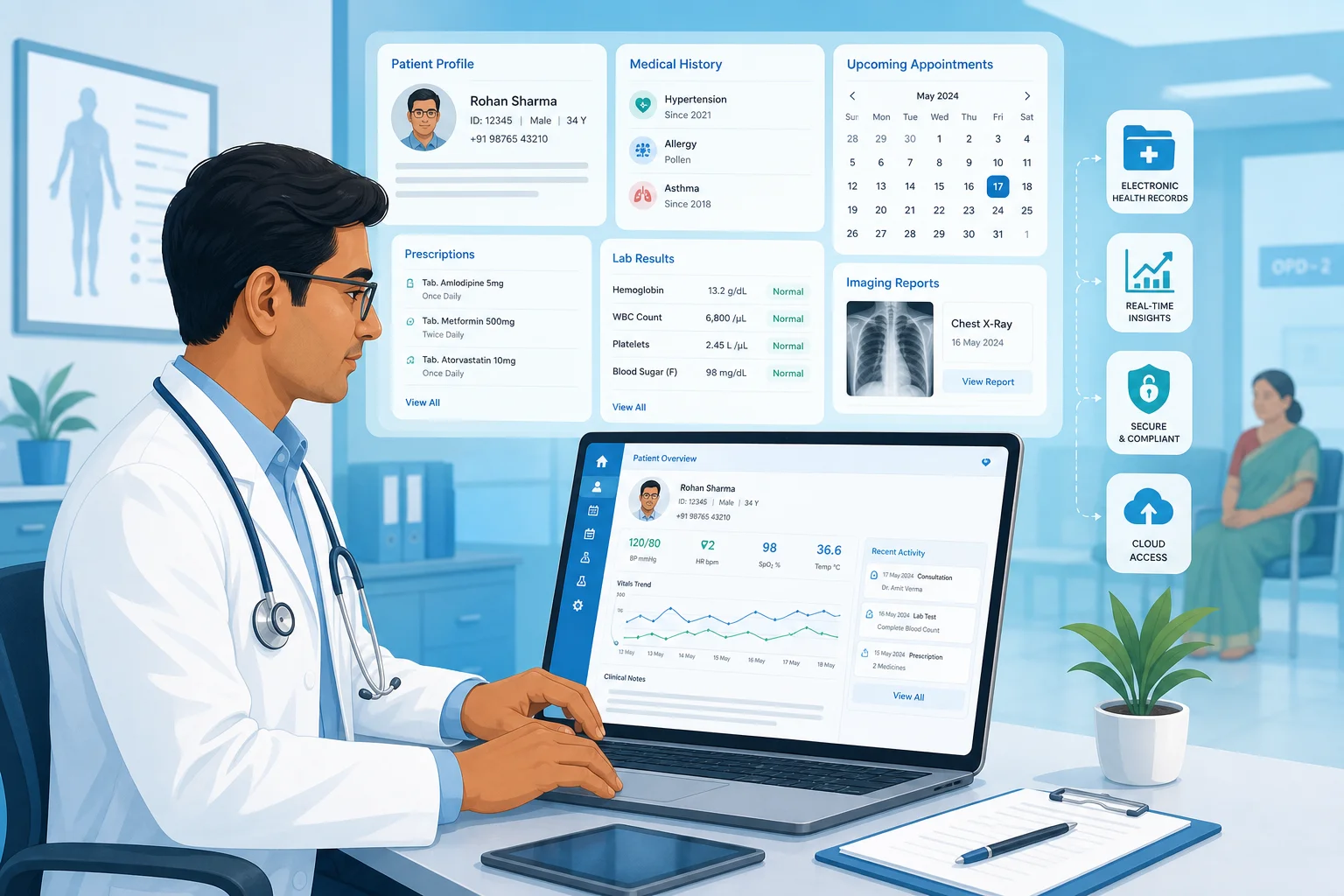
What Is EMR Software in Medical?
Healthcare is rapidly becoming more digital, and medical professionals are increasingly adopting technology to improve patient care and streamline clinical operations. One of the most important innovations in modern healthcare is Electronic Medical Record (EMR) software.
Understanding what is emr software in medical practice is essential for doctors, clinics, hospitals, and healthcare administrators looking to improve efficiency, reduce paperwork, and deliver better patient experiences.
From solo practitioners to multi-specialty hospitals, EMR software has transformed how patient information is recorded, managed, and accessed. Instead of relying on paper files, healthcare providers can securely maintain digital patient records that are available whenever they are needed.
In India, digital healthcare initiatives such as the Ayushman Bharat Digital Mission (ABDM) and increasing adoption of health technologies have accelerated the demand for EMR systems across private hospitals, government institutions, diagnostic centers, and specialty clinics.
This comprehensive guide explains everything healthcare providers need to know about EMR software, including its features, benefits, implementation process, challenges, and future trends.
Understanding EMR Software
Electronic Medical Record (EMR) software is a digital version of a patient's paper chart maintained within a healthcare organization.
It stores clinical information collected during patient visits, allowing doctors, nurses, and authorized healthcare professionals to access accurate and up-to-date medical information quickly.
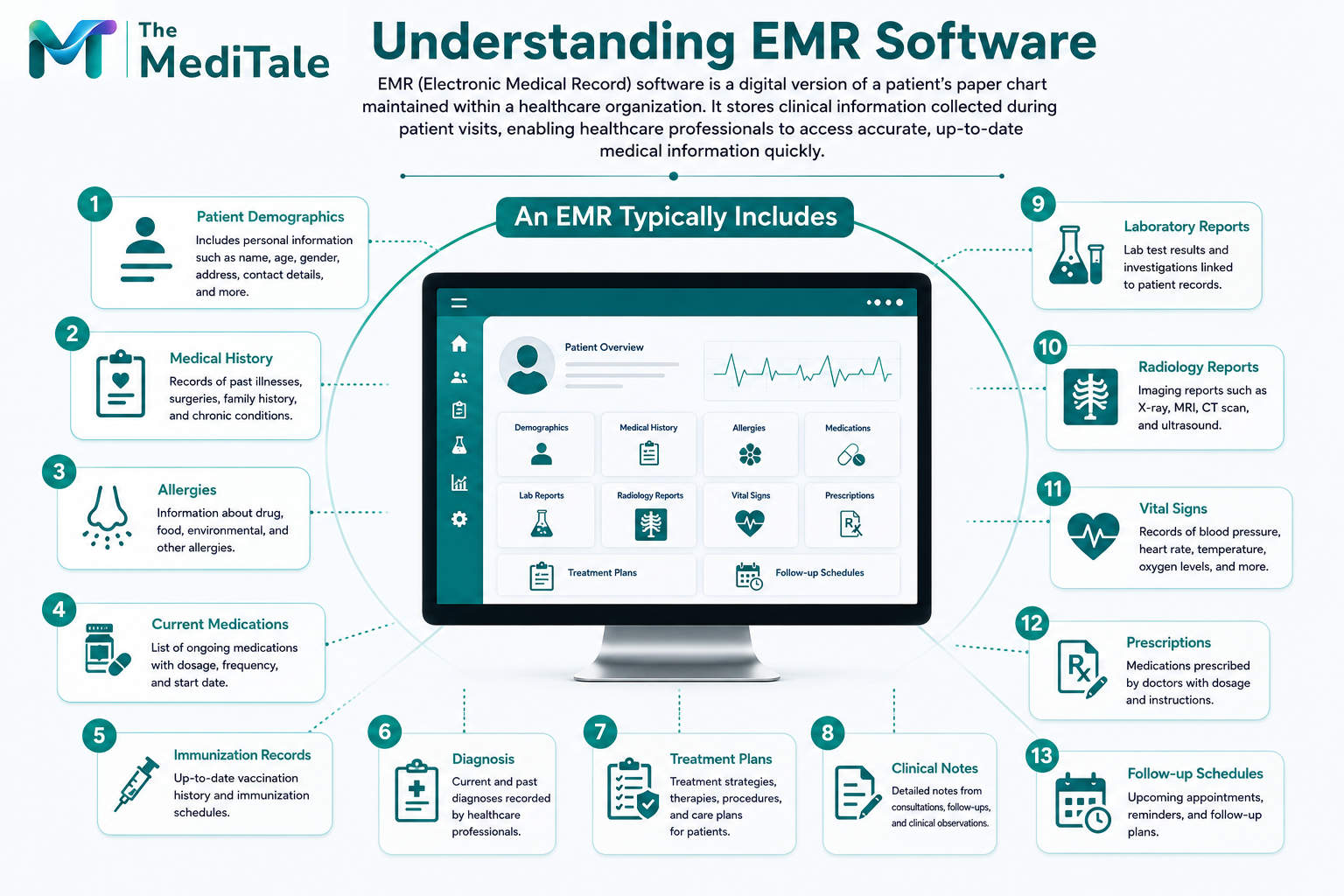
An EMR typically includes:
- Patient demographics
- Medical history
- Allergies
- Current medications
- Immunization records
- Diagnosis
- Treatment plans
- Clinical notes
- Laboratory reports
- Radiology reports
- Vital signs
- Prescriptions
- Follow-up schedules
Unlike paper records that can be misplaced or damaged, EMR software securely stores patient information in a centralized digital system.
Why EMR Software Is Becoming Essential in India
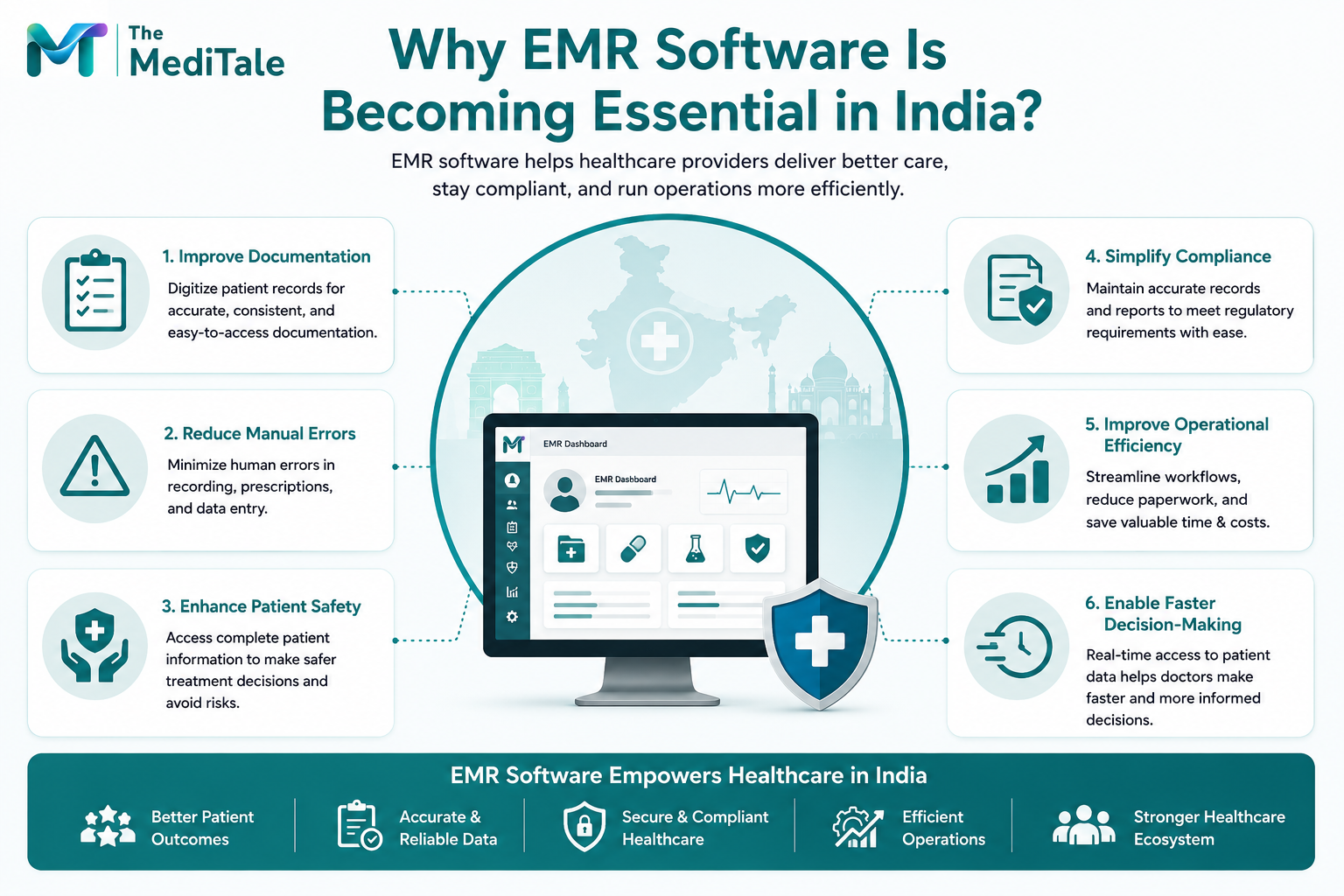
India's healthcare industry is experiencing rapid digital transformation.
Growing patient volumes, increased healthcare awareness, telemedicine adoption, and government initiatives have encouraged hospitals and clinics to modernize their operations.
Healthcare providers now require systems that can:
- Improve documentation
- Reduce manual errors
- Enhance patient safety
- Simplify compliance
- Improve operational efficiency
- Enable faster decision-making
EMR software helps healthcare organizations achieve these goals while improving patient satisfaction.
How EMR Software Works
EMR software digitizes the complete patient journey.
When a patient visits a healthcare facility, the receptionist creates or retrieves the patient's profile.
During consultation, the physician records:
- Symptoms
- Examination findings
- Diagnosis
- Treatment recommendations
- Prescriptions
- Follow-up instructions
Laboratory reports, imaging results, prescriptions, and billing details are linked to the same patient record.
At every subsequent visit, the physician can instantly review previous consultations, making treatment decisions more informed and efficient.
Core Features of EMR Software
A modern EMR system includes numerous features that simplify healthcare delivery.
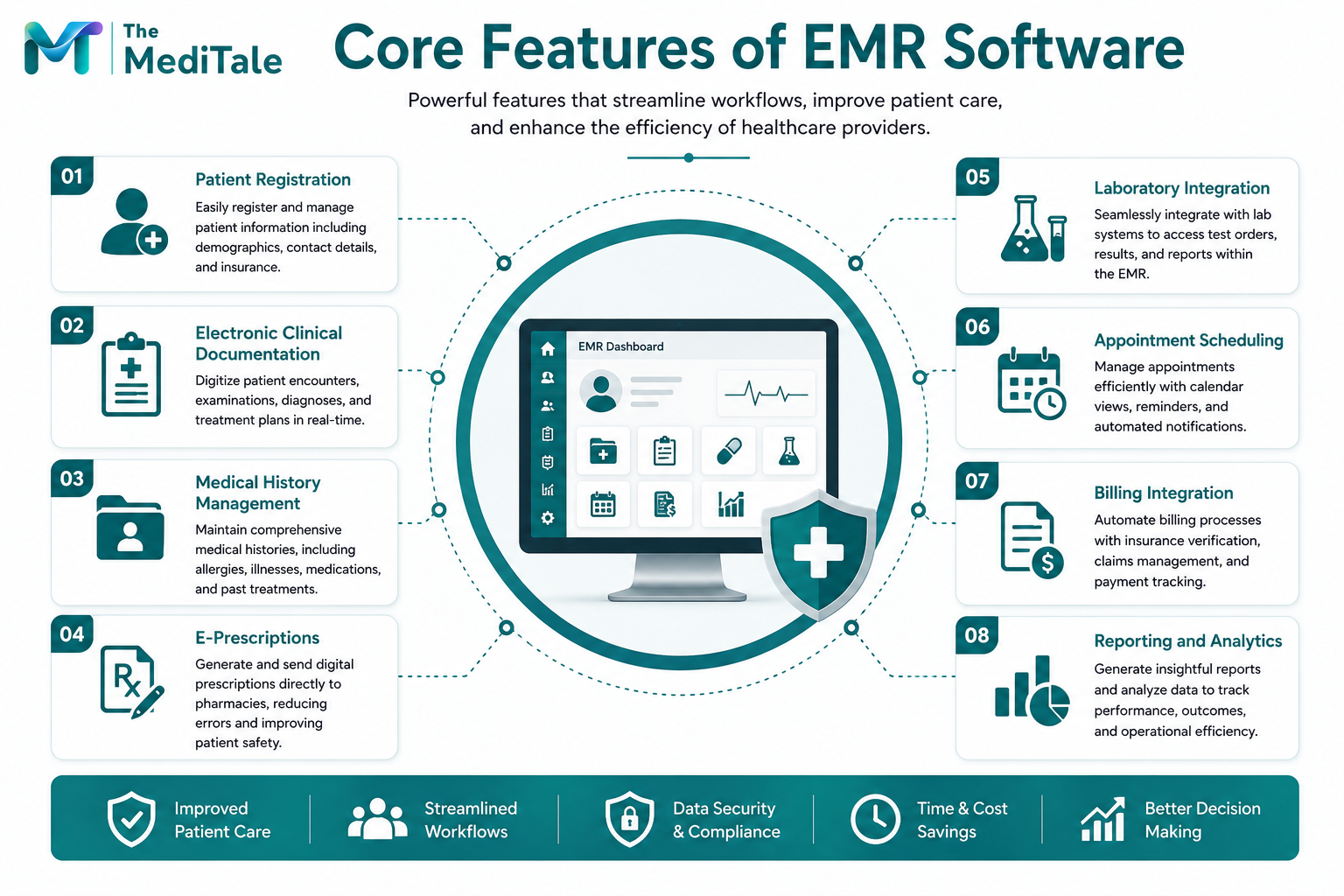
Patient Registration
Healthcare providers can create digital patient profiles containing:
- Personal details
- Contact information
- Insurance information
- Emergency contacts
- Medical identifiers
This eliminates duplicate records and speeds up future visits.
Electronic Clinical Documentation
Doctors can record consultation notes digitally using templates, voice dictation, or structured forms.
Digital documentation improves accuracy and saves considerable time.
Medical History Management
EMR software maintains complete longitudinal patient histories, including:
- Previous illnesses
- Surgeries
- Allergies
- Family history
- Chronic diseases
- Lifestyle information
Having historical data readily available improves clinical decision-making.
E-Prescriptions
Doctors can generate digital prescriptions directly from the EMR system.
Advantages include:
- Better readability
- Reduced medication errors
- Drug interaction alerts
- Prescription history
- Faster pharmacy processing
Laboratory Integration
Diagnostic reports can automatically be attached to patient records.
This enables physicians to review:
- Blood tests
- Urine reports
- Pathology
- Imaging reports
- Microbiology results
Without manually uploading documents.
Appointment Scheduling
Many EMR platforms include appointment management.
This helps clinics:
- Reduce scheduling conflicts
- Minimize missed appointments
- Improve patient flow
- Send automated reminders
Billing Integration
EMR software often integrates with billing modules to generate invoices and maintain payment records efficiently.
Clinical Decision Support
Advanced systems provide intelligent alerts regarding:
- Drug interactions
- Allergy warnings
- Duplicate medications
- Preventive screenings
- Clinical guidelines
These alerts support safer clinical decisions.
Reporting and Analytics
Healthcare administrators can generate reports on:
- Patient volume
- Revenue
- Common diagnoses
- Treatment outcomes
- Physician productivity
- Appointment trends
These insights help improve operational efficiency.
The Role of EMR Software in Medical Practice
Understanding the role of emr software in medical practice goes beyond replacing paper records.
It has become an essential clinical and administrative tool that supports every stage of patient care.
Its role includes:
- Improving documentation accuracy
- Supporting evidence-based treatment
- Enhancing communication among healthcare teams
- Reducing administrative burden
- Improving patient safety
- Streamlining workflows
- Supporting preventive healthcare
- Facilitating long-term patient monitoring
- Improving clinical outcomes
- Enabling better resource utilization
Modern healthcare increasingly depends on digital information, making EMR software a foundational component of quality care.
Benefits of EMR Software
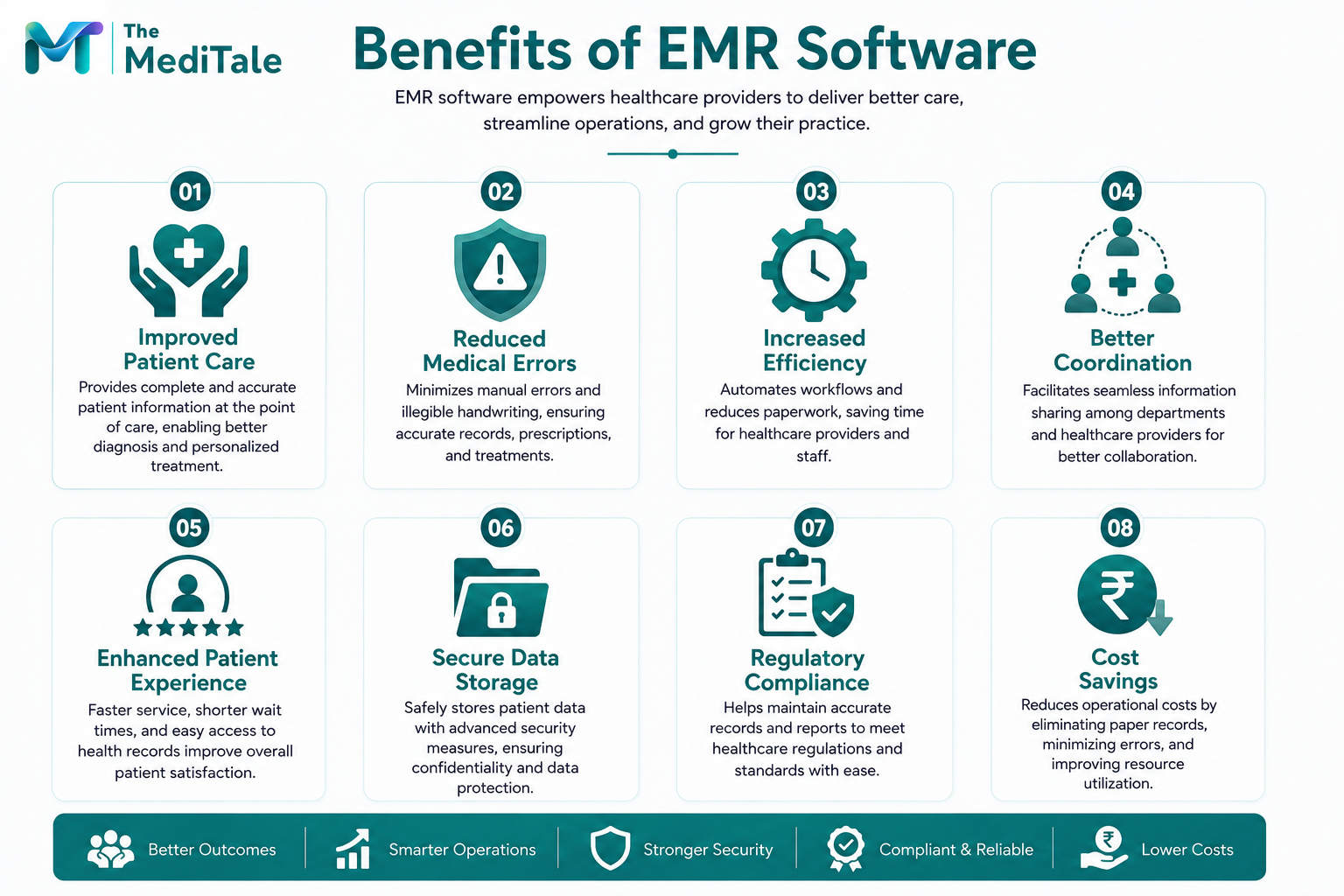
Improved Patient Care
Doctors have immediate access to complete patient histories, helping them make better clinical decisions.
This leads to:
- Faster diagnosis
- Personalized treatment
- Better continuity of care
- Reduced duplicate testing
Reduced Medical Errors
Illegible handwriting and missing documentation often contribute to treatment errors.
EMR software reduces these risks by maintaining standardized digital records.
Increased Efficiency
Administrative staff spend less time handling paper records.
Doctors can access patient information within seconds instead of searching through physical files.
Better Coordination
Departments such as:
- Laboratory
- Pharmacy
- Radiology
- Nursing
- Administration
Can work using the same patient record, improving coordination.
Enhanced Patient Experience
Patients benefit from:
- Shorter waiting times
- Faster consultations
- Better follow-up care
- Improved communication
Secure Data Storage
Patient records remain protected through:
- User authentication
- Access controls
- Data encryption
- Regular backups
- Audit logs
Regulatory Compliance
Digital documentation supports healthcare organizations in maintaining accurate records required for quality standards and accreditation.
Cost Savings
Although implementation requires investment, EMR software helps reduce long-term operational costs by minimizing paper usage, storage expenses, administrative overhead, and duplicated investigations.
EMR vs EHR: Understanding the Difference
These terms are often used interchangeably, but they serve different purposes.
Feature | EMR | EHR |
|---|---|---|
Primary Use | Single healthcare organization | Multiple healthcare organizations |
Data Sharing | Limited | Extensive |
Patient Record Scope | Internal clinical records | Comprehensive lifelong health record |
Accessibility | Within one practice | Across connected providers |
Care Coordination | Limited | Advanced |
Both systems improve healthcare, but EHRs are generally designed for broader interoperability across healthcare organizations.
EMR vs Paper Records
Paper Records | EMR Software |
|---|---|
Difficult to search | Instant search |
Prone to damage | Secure digital storage |
Manual updates | Real-time updates |
Limited accessibility | Authorized access anytime |
Storage intensive | Minimal physical storage |
Higher administrative effort | Automated workflows |
Who Should Use EMR Software?
EMR software benefits nearly every healthcare provider, including:
- Multi-specialty hospitals
- Small clinics
- General physicians
- Pediatricians
- Dentists
- Gynecologists
- Orthopedic clinics
- Dermatologists
- Physiotherapy centers
- Mental health professionals
- Diagnostic laboratories
- Day-care surgery centers
How EMR Supports Different Medical Specialties
Every specialty has unique documentation requirements, and modern EMR systems provide customizable templates.
For example:
- Pediatricians can track vaccination schedules and growth charts.
- Cardiologists can monitor ECG reports and long-term cardiac history.
- Orthopedic specialists can document fractures, imaging, and rehabilitation progress.
- Dermatologists can maintain treatment timelines with clinical images.
- Obstetricians can record antenatal visits, ultrasound findings, and delivery history.
- Mental health professionals can securely document therapy notes and medication progress.
Specialty-specific workflows reduce documentation time and improve consistency.
EMR Integration with Other Healthcare Systems
An effective EMR becomes even more valuable when integrated with other digital healthcare tools.
Common integrations include:
- Laboratory Information Systems (LIS)
- Radiology Information Systems (RIS)
- Pharmacy Management Software
- Hospital Information Systems (HIS)
- Practice Management Software
- Telemedicine Platforms
- Online Appointment Portals
- Payment Gateways
- Insurance Claim Processing
- SMS and Email Notification Systems
These integrations eliminate duplicate data entry and create a more connected healthcare environment.
Cloud-Based vs On-Premise EMR Software
Healthcare organizations often choose between cloud-hosted and on-premise deployment.
Cloud-Based EMR
Advantages
- Lower upfront cost
- Automatic software updates
- Remote access
- Easy scalability
- Faster deployment
Best suited for
- Small clinics
- Multi-location practices
- Growing healthcare organizations
On-Premise EMR
Advantages
- Greater control over infrastructure
- Internal data hosting
- Custom server management
Best suited for
- Large hospitals with dedicated IT teams
- Organizations with strict internal infrastructure policies
Common Challenges in EMR Adoption
Despite its advantages, implementation can present challenges.
These may include:
- Staff resistance to change
- Initial learning curve
- Data migration from paper records
- Training requirements
- Integration with legacy systems
- Internet connectivity concerns for cloud solutions
- Upfront implementation costs
These challenges can be minimized with proper planning, staff training, phased deployment, and selecting a reliable software provider.
Best Practices for Successful EMR Implementation
Healthcare organizations can improve adoption by following these practices:
- Assess clinical and administrative requirements.
- Choose software that aligns with the size and specialty of the practice.
- Involve doctors, nurses, and administrative staff during selection.
- Migrate existing patient records carefully.
- Provide comprehensive user training.
- Test workflows before full deployment.
- Monitor performance and gather user feedback.
- Schedule regular software updates and security audits.
Future Trends in EMR Software
Technology continues to reshape electronic medical records.
Key trends include:
- Artificial intelligence for clinical decision support
- Predictive analytics
- Voice-enabled documentation
- Mobile EMR applications
- Patient self-service portals
- Wearable device integration
- Remote patient monitoring
- Telemedicine integration
- Automated coding and billing
- Enhanced cybersecurity measures
These innovations will continue to improve efficiency, reduce administrative burdens, and support more personalized healthcare.
Conclusion
Electronic Medical Record software has become an essential part of modern healthcare delivery. By replacing paper-based documentation with secure digital records, EMR systems help healthcare providers improve efficiency, enhance patient safety, reduce administrative burdens, and support better clinical decision-making.
As India's healthcare ecosystem continues its digital transformation, EMR adoption is expected to grow across hospitals, clinics, and specialty practices. Organizations that invest in a well-designed EMR system today will be better prepared to meet future healthcare demands, deliver higher-quality patient care, and operate more efficiently in an increasingly connected medical environment.